
Retirement is the time to dive into hobbies like art, crafting, model trains, classic car restoration or woodworking. But you’ll get most satisfaction from these hobbies if you have dedicated space for them.
Renting studio space is one option, and this has the benefit of motivating you to leave the house – but it may be more convenient and secure to use a room you already have at home.
If you are using your garage, a spare room or an outbuilding at home just for storing stuff you don’t use (or don’t use very often), that space could be repurposed for an activity that will bring you joy. By decluttering and reducing your possessions, you can make space for a hobby or pass-time that you’ve always wanted to pursue, whether it’s table-top gaming, building a doll’s house, learning a musical instrument, or painting watercolours.
What is clutter?
Clutter is best defined as domestic goods that are getting in the way of your day-to-day life. Clutter can be:
- items that you do want, just not right now – for example Christmas decorations in August.
- things that don’t belong to you that you’re storing for someone else, such as your grown-up children’s possessions.
- things that you don’t want but that you are hanging on to.
Let’s take these categories one by one.
Use self-storage for seasonal items
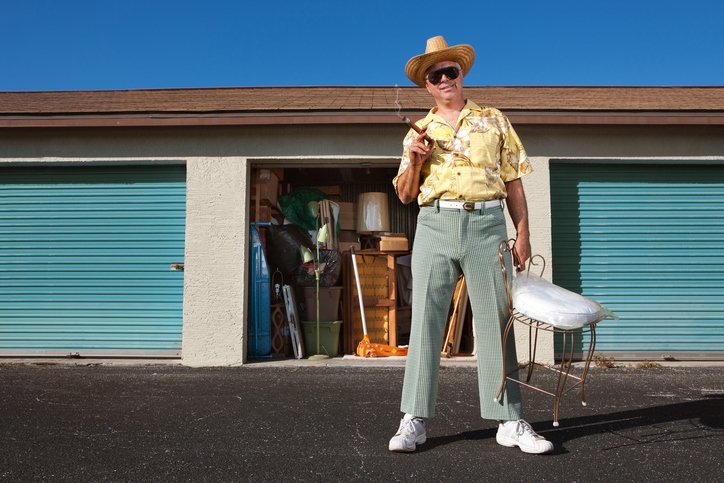
Seasonal items that you only use at certain times of year – for example, Christmas decorations – can be stored in a less accessible spot such as a loft. Or you could keep them outside your home in self-storage.
Self-storage is also a good solution for toys that your children can’t face getting rid of.
The monthly cost of self-storage varies, so it’s best to get a few quotes before you commit to ensure you’re not overpaying. You can also shop around for self-storage insurance. Get a quote from Store and Insure to see how much it would cost to insure your stored goods.
Talking about stored possessions
If you’re storing things for family members, but you’d like the space back, it’s time for a conversation. You know your relatives best – whether they need a direct approach, or whether it’s better to be circumspect. A reasonable deadline might encourage them to act. You could also ask if they are willing to chip in to pay for self-storage.
If they no longer want their stuff, it’s reasonable to ask them to dispose of it, particularly if they think it’s worth selling.
Getting rid of stuff you don’t want any more
An easy win in decluttering to make more space for retirement projects is disposing of items that are broken or that no longer fit your lifestyle.
It’s really common to hang on to broken stuff that could be repaired – but if it’s been a few years already, it is time to accept that the repair is not happening, and it’s time to get rid.
Post items that no longer fit your lifestyle and aspirations (cross trainer, anyone?) on local marketplaces, as people wanting to try a new hobby will be keen to pick up second-hand kit.
Hiring a junk shifter or a house clearance service can be a cost-effective way of getting rid of unwanted domestic goods, particularly if you want to avoid the effort of finding a market for anything saleable, or going to the tip with the rubbish. Again, get a few quotes – many junk shifters will quote based on a photograph of the stuff you are disposing of. And use a reputable carrier as some dishonest scammers will take your money and fly tip the waste, rather than taking it to the recycling centre. Check the Defra waste carrier’s register to make sure your chosen clearance service is legit.
If you have a lot of possessions that you don’t want, consider working with a decluttering coach to explore why you’re holding on to these things, as this can make letting them go easier, and it could change your outlook so you don’t accumulate unwanted stuff again.
Making space at home has its own rewards
Another benefit of clearing out your unwanted possessions is that a decluttered home is easier to care for. So not only will you have the space for your retirement projects; you’ll also have more energy for the activities you enjoy.