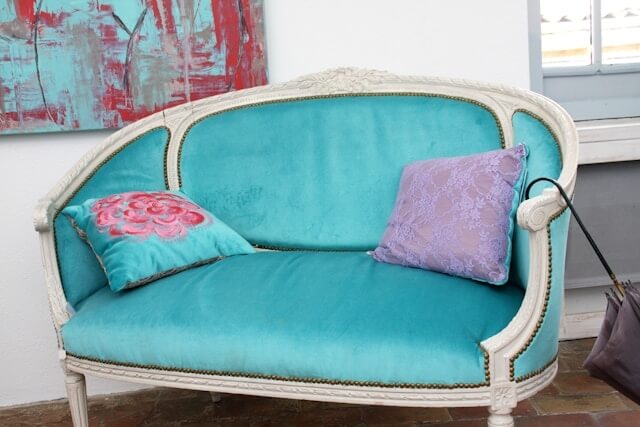
Lived-in, inviting and cosy. If these are at the heart of your aesthetic – whether you lean towards rustic modern, cottagecore, French country or shabby chic, you’ll know that imperfection, fading and patina are features to be prized, rather than polished away.
Furniture with distressed finishes such as chalk paint, milk paint, raw wood or waxed wood are very much in line with the shabby chic aesthetic, as popularised by designer Rachel Ashwell. And although shabby chic is a fairly low maintenance style, you don’t want to end up sliding into tatty and unloved, so some cleaning and care is needed.
- The golden rule for distressed finishes: minimal intervention
As mentioned above, shabby chic can be a low maintenance style. With distressed finishes, often the best cleaning is the least cleaning. Surfaces painted with chalk or milk paint are not durable, and if you go at it too vigorously, you’re as likely to take off the paint and finishes as you are dirt and stains.
- Dry dust first: use a soft microfibre cloth or a natural bristle brush to remove loose dust.
- The wring-dry test: If you must use water to clean furniture with a distressed finish, the cloth should be barely damp, because too much water can reactivate chalk paint. If you can squeeze a single drop of water out of the cloth, it is too wet.
- Safe cleaning solutions for wood furniture
When dry or damp dusting isn't enough to remove grime or oily fingerprints, use these mild mixtures:
- The washing-up liquid technique: mix a few drops of mild washing-up soap into a bowl of warm water. Dip a cloth, wring it until nearly dry, and wipe gently. Avoid watermarks by drying with a second cloth.
- Vinegar for stubborn spots: For sticky residue, a solution of one-part white vinegar to two parts water can work. Vinegar can dull certain wax finishes, so use only when you really need it, or you’ll be reapplying wax more often.
- Mineral spirits: For heavy wax build-up or deep-seated grime on non-painted wood sections, a tiny amount of mineral spirits on a cotton ball is a professional restorer's trick. Always test a hidden area first , as this can strip some types of paint.
- Maintaining and protecting shabby chic furniture
- Beeswax is your friend: Beeswax polish will protect your furniture’s finish, but it does need to be reapplied every year or so. Apply a tiny amount and buff well to get a reliable finish. Beeswax makes a breathable layer that repels stains and this treatment will keep your furniture looking cared for while protecting that precious patina.
- Refinishing furniture: If despite your care, you can’t remove a stain, consider touching up or refinishing the piece. Shabby chic furniture often has layers and traces of earlier finishes: this is an aesthetic that tells a story.
- Climate control: Antique and shabby chic furniture is sensitive to humidity, light and heat. Keep pieces away from direct sunlight (which fades paint) and heat sources like radiators (which cracks old wood).
Storing shabby chic furniture
If you need to store this type of furniture, consider using a self-storage facility with climate control. Don’t let pieces finished with chalk paint or distressed wood languish in a damp, chilly outbuilding or garage, even temporarily. To learn why, see our post on climate controlled storage.
Even though chips and dents are all part of the shabby aesthetic, do protect your furniture when moving it. Use blankets and padding to protect painted surfaces. When you insure your stored furniture with Store and Insure, you’ll have coverage while moving your stuff in and out of storage.
There is so much to love about the shabby chic aesthetic, with its muted colours, its warmth and its cozy embracing of chips and wear. Caring for your furniture, with their dints, divots and fragile finishes, is a way of embodying that affection for imperfection.